Building a new home is one of the most significant milestones in life, but deciding how to go about it can feel overwhelming. In Australia’s current shifting property market, navigating high interest rates and cost-of-living pressures requires a strategy that balances cost-efficiency with long-term value. One path that continuously gains traction across the nation is opting for a bundled deal from a developer and builder. But is a house and land package truly the smartest way to get your dream home, or are you better off buying a standalone block and sourcing an independent builder later?
To help you work out the best path forward, we dive deep into the pros, cons, and financial mechanics of this popular building method.
The Power of Simplified Finance and Upfront Pricing
One of the biggest hurdles when building a custom home is the unpredictability of costs. When you deal with separate entities for your block and your construction, unforeseen expenses like complex siteworks, council retaining regulations, or bushfire attack level (BAL) ratings can quickly blow your budget out of the water.
A bundled package tackles this headache head-on by streamlining the process. It operates under two distinct contracts—one for the land purchase and one for the construction—yet they are packaged together at a fixed, transparent price. This upfront clarity is incredibly reassuring for banks and lenders, making the mortgage approval process significantly smoother than it would be for an open-ended custom build. For buyers trying to maximise their borrowing power in a tight economic climate, this predictability is a massive financial advantage.
Massive Savings on Stamp Duty
When evaluating the smartest way to build, tax savings must be part of the equation. Buying an established home means you pay stamp duty on the entire value of the property—both the dwelling and the dirt it sits on.
Choosing a bundled package flips this script in your favour. Because the dwelling does not exist when you settle on the property, you generally only pay stamp duty on the land component. On a standard metropolitan lot, this distinction can easily save you tens of thousands of dollars in upfront cash. For first home buyers or investors trying to stretch their capital, these immediate savings can be redirected into premium interior upgrades, landscaping, or simply kept as a safety buffer for your mortgage.
Modern Master-Planned Communities and Lifestyle Perks
Most bundled packages are located within newly developed, master-planned estates in growing regional hubs and outer-metropolitan corridors. These communities are meticulously designed from the ground up to support modern lifestyles, incorporating green spaces, walking tracks, playgrounds, and upcoming retail precincts.
Furthermore, builders design the homes to perfectly match the orientation, soil type, and dimensions of the specific lots. This means you avoid the architectural headache of trying to force a standard floor plan onto an awkwardly shaped block. Modern 2026 design trends focus heavily on wellness, sustainability, and flexible spaces. The floor plans offered in these packages reflect this by maximizing natural light, integrating smart home automation, and incorporating the seamless indoor-outdoor alfresco connections that Aussies love.
Understanding the Trade-Offs: Location and Personalisation
While the perks are substantial, a bundled package isn’t a magic bullet for every type of buyer. The most notable trade-off is location. Because these packages rely on freshly subdivided land, they are predominantly situated in newer growth corridors rather than established, inner-city suburbs. If your lifestyle dictates a short commute to a major metropolitan CBD, or if you prefer the character of an older neighborhood with mature trees, a greenfield estate might feel a bit too far removed from the action.
There is also the element of design flexibility. While most volume builders offer a fantastic array of premium fixtures, colour palettes, and structural modifications, you are ultimately working within a pre-determined framework. If you have your heart set on a completely bespoke, architecturally unique home with avant-garde materials, you will likely find the standard inclusions list limiting.
Spotting the Sneaky Inclusions and Hidden Extras
To ensure your build remains a smart financial move, you must read the fine print regarding what is actually included in the advertised headline price. Some builders advertise incredibly low entry prices by stripping the package back to the bare bones.
When comparing options, always ask for a comprehensive turnkey inclusions list. You want to know if essentials like driveways, fencing, clotheslines, flooring, and basic window treatments are included, or if you will have to pay for them out of pocket once the keys are handed over. Site costs are another critical element; ensure the builder has conducted proper soil testing and included fixed site costs in the contract so you aren’t hit with a surprise bill for rock excavation halfway through the foundation pour.
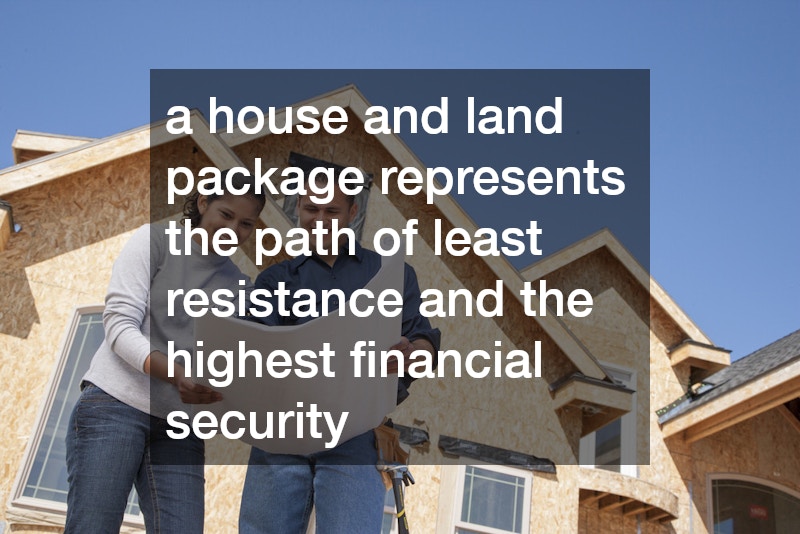
For many Australians, choosing a house and land package represents the path of least resistance and the highest financial security. The combination of significant stamp duty concessions, predictable fixed-price contracts, and the ease of a coordinated design process makes it an incredibly intelligent choice—especially for first-time buyers and property investors looking for a reliable, low-stress path to ownership.
If you value complete architectural freedom or crave an inner-city postcode, a custom route or an established home may serve you better. However, if your goal is a modern, energy-efficient home nestled in a vibrant new community without the financial anxiety of a fluctuating budget, then securing a house and land package is arguably one of the smartest ways to build your future.